Adipose Tissue Sectioning: Why Poor‑Quality Sections Occur Even at Sufficiently Low Temperatures
| September 24, 2026
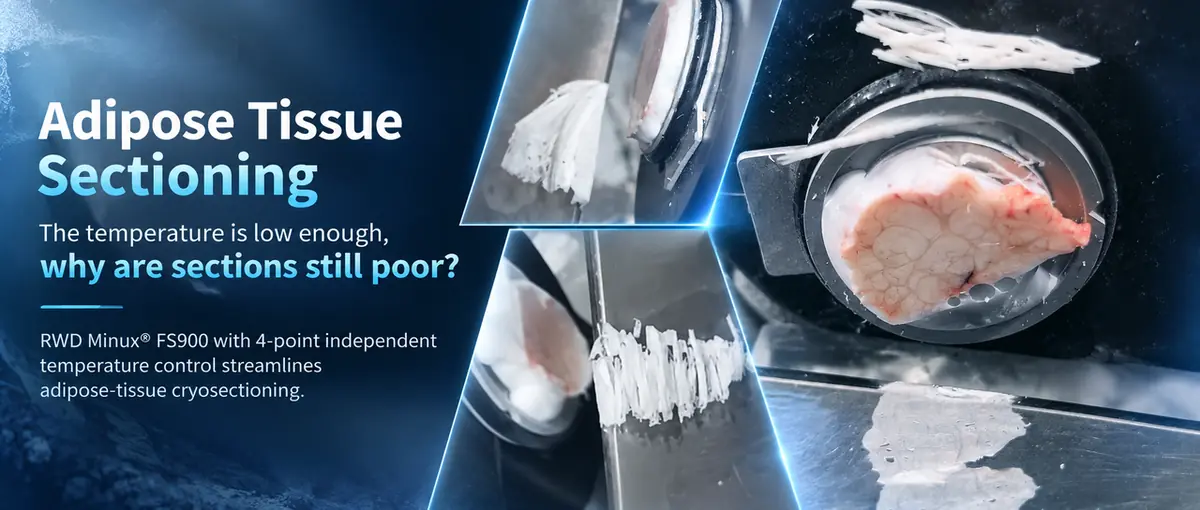
When adipose tissue turns soft and sticks to the blade, many operators instinctively lower the temperature further. However, sections may fail to form even after the temperature is set to its minimum value.
Why Is Adipose Tissue Difficult to Section?
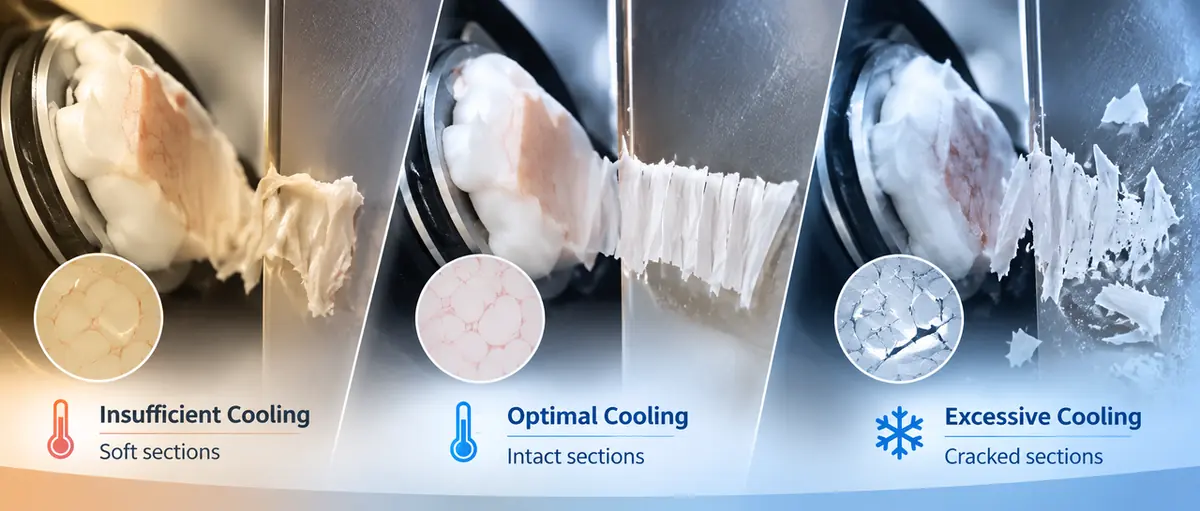
Comparison of three states of adipose tissue: too‑soft — optimal for sectioning — over‑cooled and fragmented
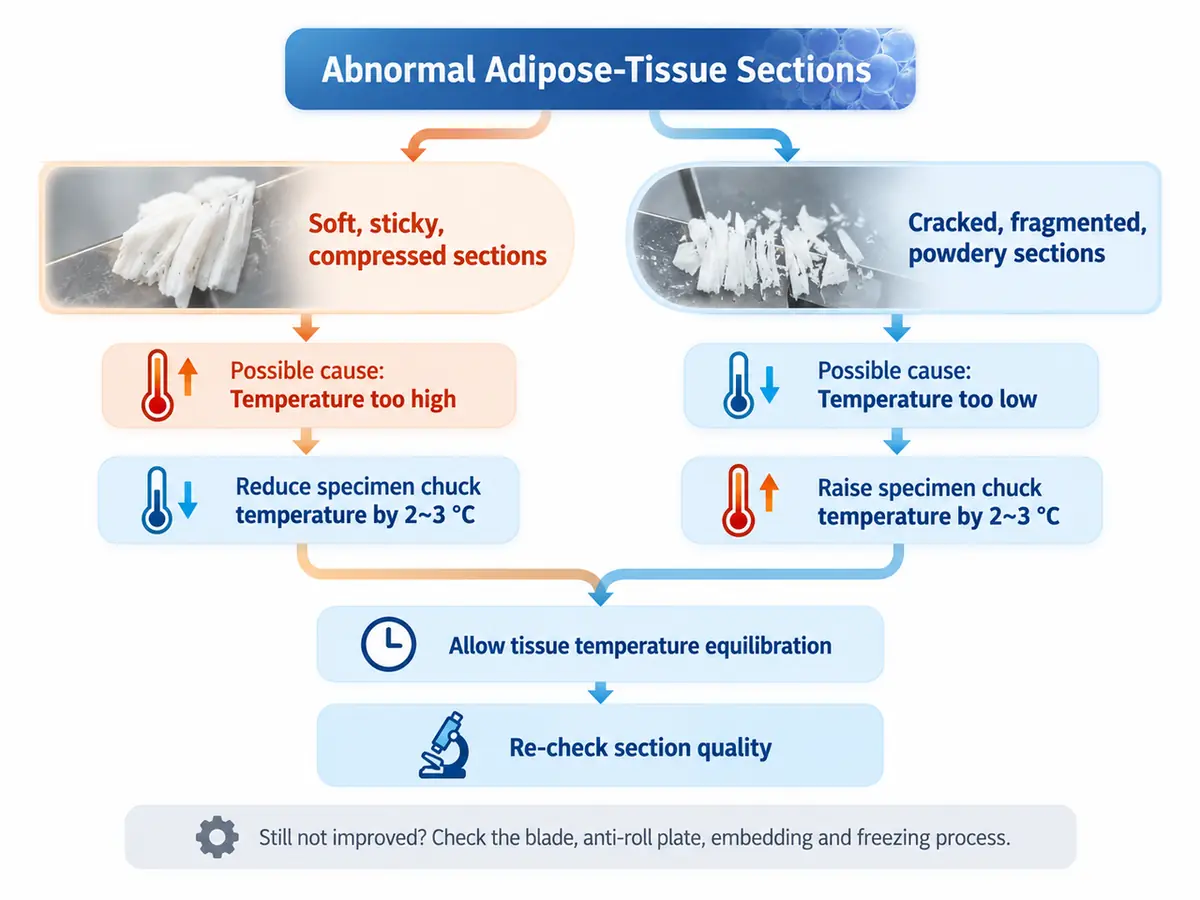
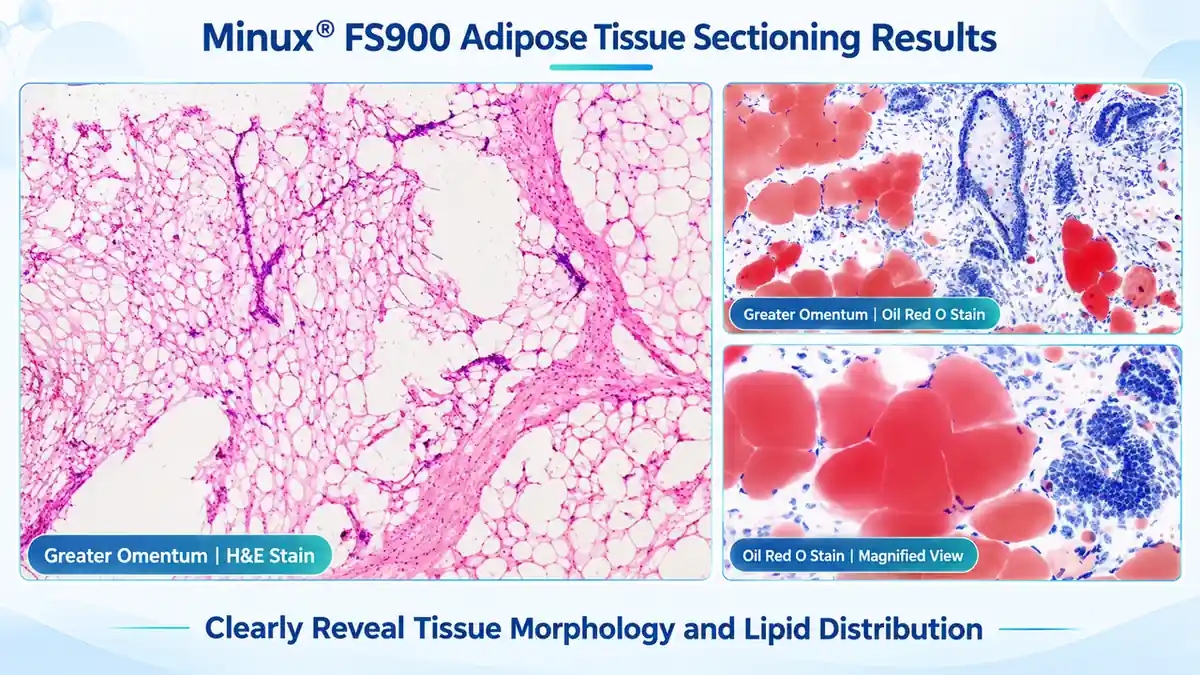
Adipose tissue contains abundant lipids. At relatively high temperatures, the tissue lacks sufficient hardness and is prone to compression, folds, blade adhesion or tearing. For this reason, lipid‑rich tissues generally require lower temperatures than routine tissues; start testing with a specimen‑head temperature of −28 ~ −32 °C.
Nevertheless, further cooling renders the tissue and OCT compound excessively hard and brittle, giving rise to transverse striae, cracking, fragmentation, or separation from the embedding medium.
How the Minux® FS900 Optimizes Adipose‑Tissue Sectioning
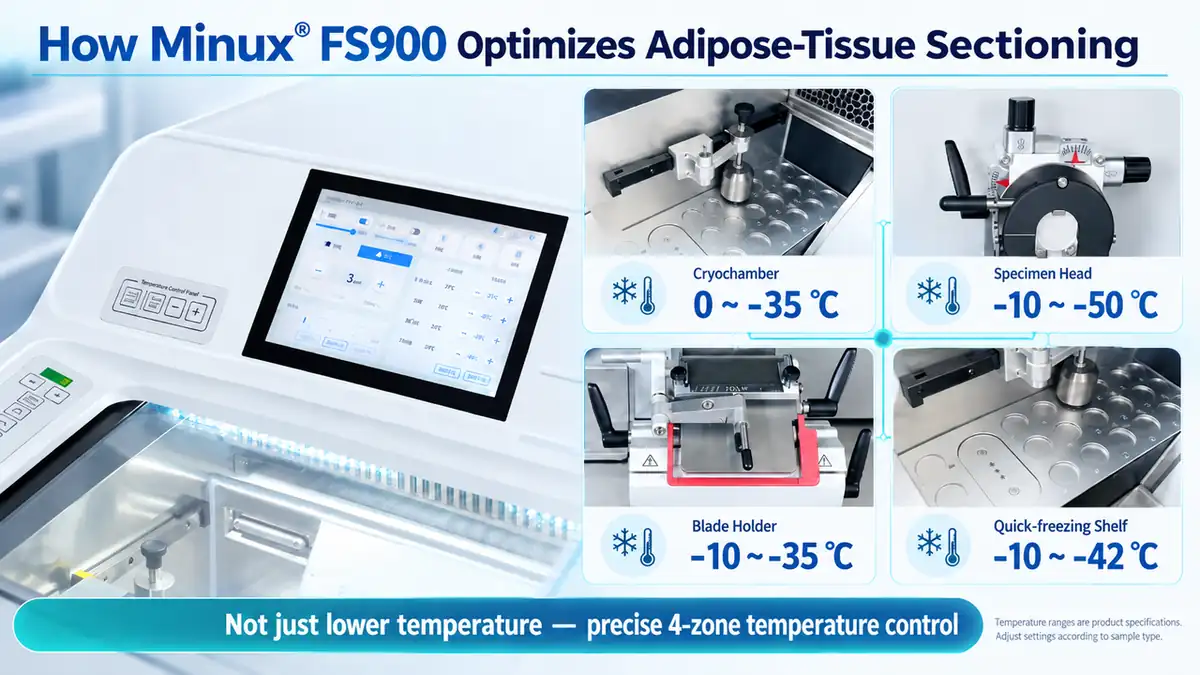
Section quality depends not merely on cryochamber temperature, but also on the specimen head, blade holder and freezing workflow.
If only the cryochamber temperature is reduced, adipose tissue may just reach suitable hardness while OCT compound and other tissue components become over‑cooled.
The RWD Minux® FS900 is equipped with dual‑compressor refrigeration and supports four‑zone independent temperature control for the cryochamber, specimen head, blade holder and quick‑freezing shelf.
For adipose‑tissue processing, adjust the specimen‑head temperature independently without cooling the entire cryochamber.
Independent cooling for the blade holder minimises temperature gradients across the cutting zone, lowering adhesion and deformation.
The temperature‑controlled quick‑freezing shelf balances rapid freezing and precise thermal regulation, reducing ice‑crystal formation and tissue cracking induced by over‑freezing.
A perfect adipose‑tissue section does not necessarily demand an even lower temperature. Instead, it relies on precise, independent and stable temperature regulation.
Thanks to four‑zone independent temperature control and pre‑configured thermal protocols, the FS900 enables easy adjustment, storage and reproducibility of sectioning conditions for adipose‑rich tissues.
From lipid‑rich specimens to routine samples, the Minux® FS900 delivers consistent reliable performance.
For further product information about the FS900 or technical consultation on sectioning challenges, please contact us.
1.Fill in the form and our experts will get back to you ASAP!
2.Ask about An Equipment
3.Wondering which equipment to conduct your researches or perform your experiments? Our
sales reps will try their best to share their knowledge with you!
4.Get Technical Support
5.An RWD equipment is not performing? Talk to our support team to get instant feedback!