Porduct Features and Highlights
Mainstream CO₂ Monitoring with Fast 4-Second Readings
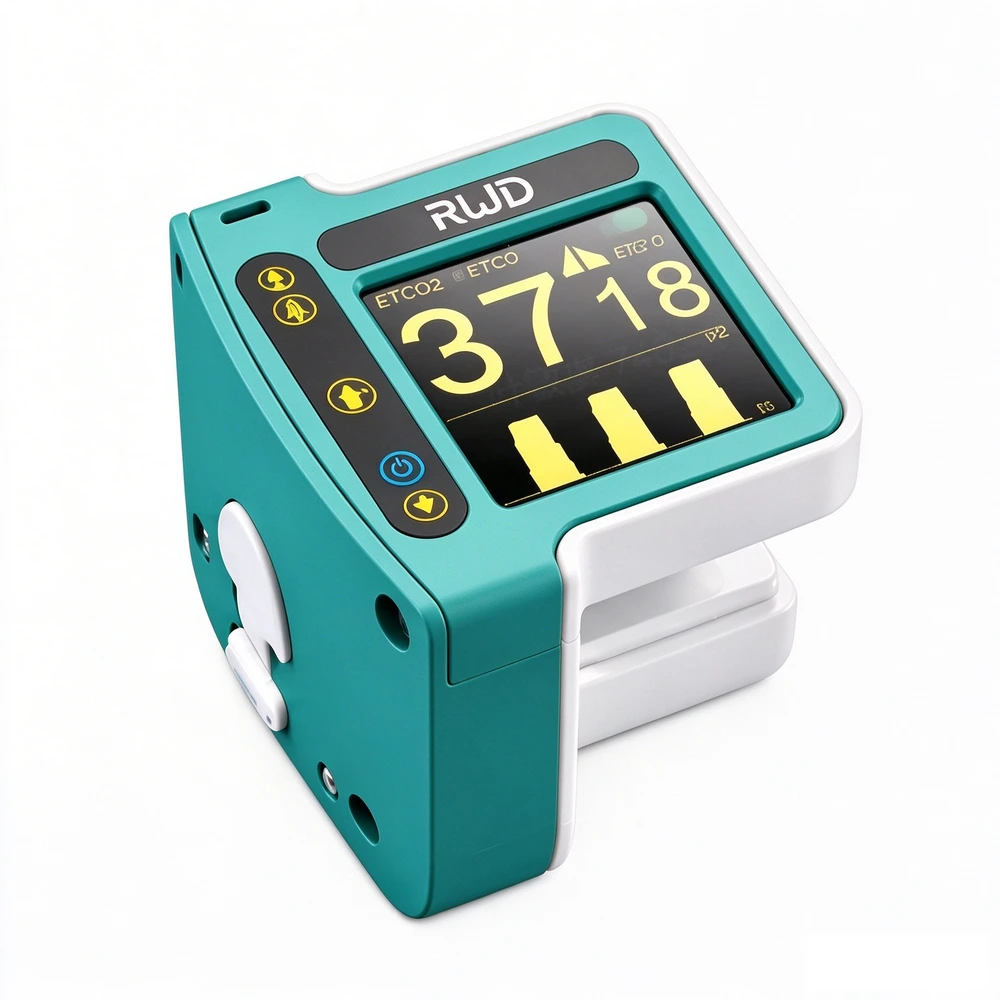
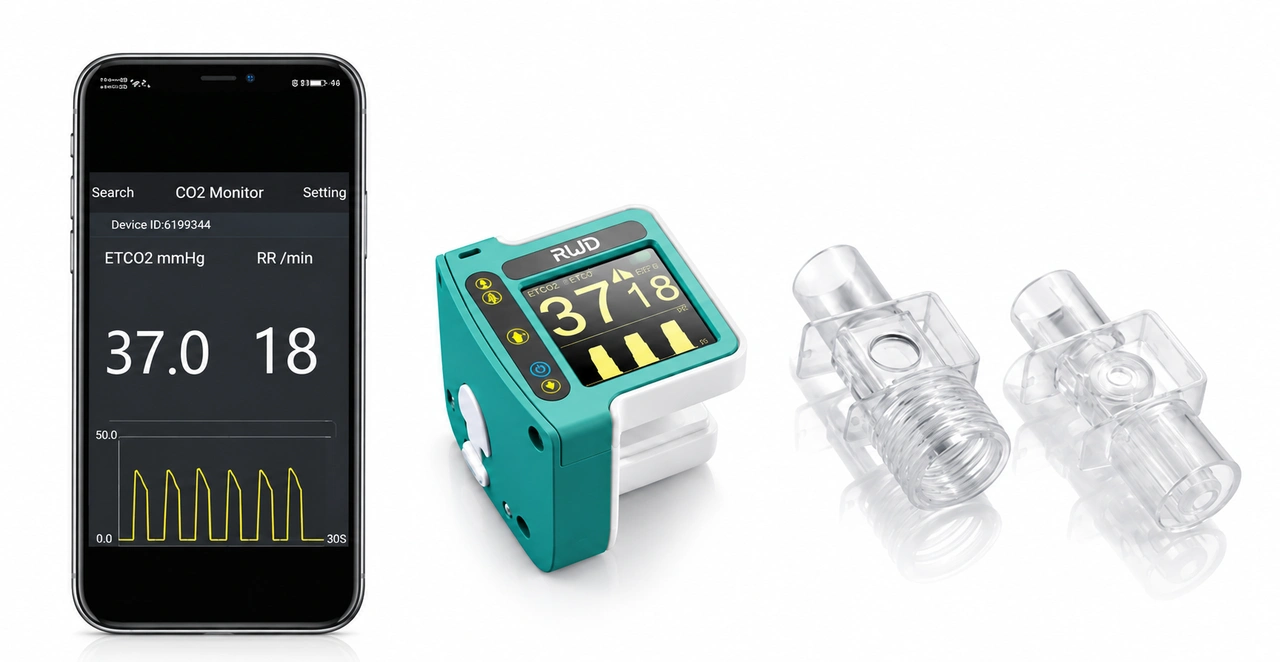
Based on mainstream CO₂ monitoring technology, the RM-C2 measures exhaled CO₂ concentration in real time and displays measurement data and ETCO₂ waveforms within 4 seconds, enabling veterinarians to quickly assess the patient’s ventilation status.
Bluetooth Connectivity for Remote Monitoring via Mobile App
Compatible with a free mobile app, the RM-C2 supports wireless Bluetooth connectivity with a data output rate of 50 Hz. Veterinarians can remotely view respiratory monitoring data on their smartphones, providing greater flexibility without the constraints of wired connections.
Audible and Visual Alarms for Comprehensive Patient Safety
Comprehensive alarms are provided for abnormal conditions, including high or low ETCO₂, abnormal respiratory rate, apnea, and low battery. Simultaneous waveform and numerical displays provide veterinarians with comprehensive information for clinical assessment.
Compact, Lightweight Design with Long Battery Life
The monitor weighs less than 68 g (including the battery) and features a 1.44-inch TFT color display. It is powered by a rechargeable 1,200 mAh lithium battery and equipped with a Type-C charging port, providing a battery life of at least 6 hours.
Applications
Anesthesia Monitoring
ETCO₂ is recognized as the sixth vital sign, following body temperature, respiratory rate, pulse, blood pressure, and oxygen saturation. The American Society of Anesthesiologists (ASA) has established ETCO₂ monitoring as one of the basic monitoring standards during anesthesia.
Monitoring ETCO₂ helps veterinarians assess ventilation and adjust ventilation parameters accordingly, supporting the safe use of anesthesia machines and ventilators.
Critical Care & Emergency Medicine
The RM-C2 is suitable for critical patients with various conditions, including respiratory insufficiency, heart failure, pulmonary embolism, and severe shock. Continuous ETCO₂ monitoring also helps assess the effectiveness of cardiopulmonary resuscitation (CPR), providing valuable data to support emergency treatment decisions.
Mechanical Ventilation Management
During mechanical ventilation, complications such as incorrect endotracheal tube placement, air leakage, tube kinking, or airway obstruction can cause immediate changes in ETCO₂ readings and waveform patterns, triggering alarms for timely detection and intervention.
Continuous ETCO₂ monitoring also provides valuable information to support the assessment of a patient’s readiness for weaning from mechanical ventilation.